
March 18, 2026 • Beonbtgo.net editorial team
What changed on this page. The earlier version was written as if by the operator and mixed history with invented detail, such as an 18th-century ivory chip from Monte Carlo that staked a nobleman’s whole estate, although the casino in Monte Carlo opened only in the 1860s. Those passages have been removed; this page keeps to well-documented history and to checks you can do yourself.
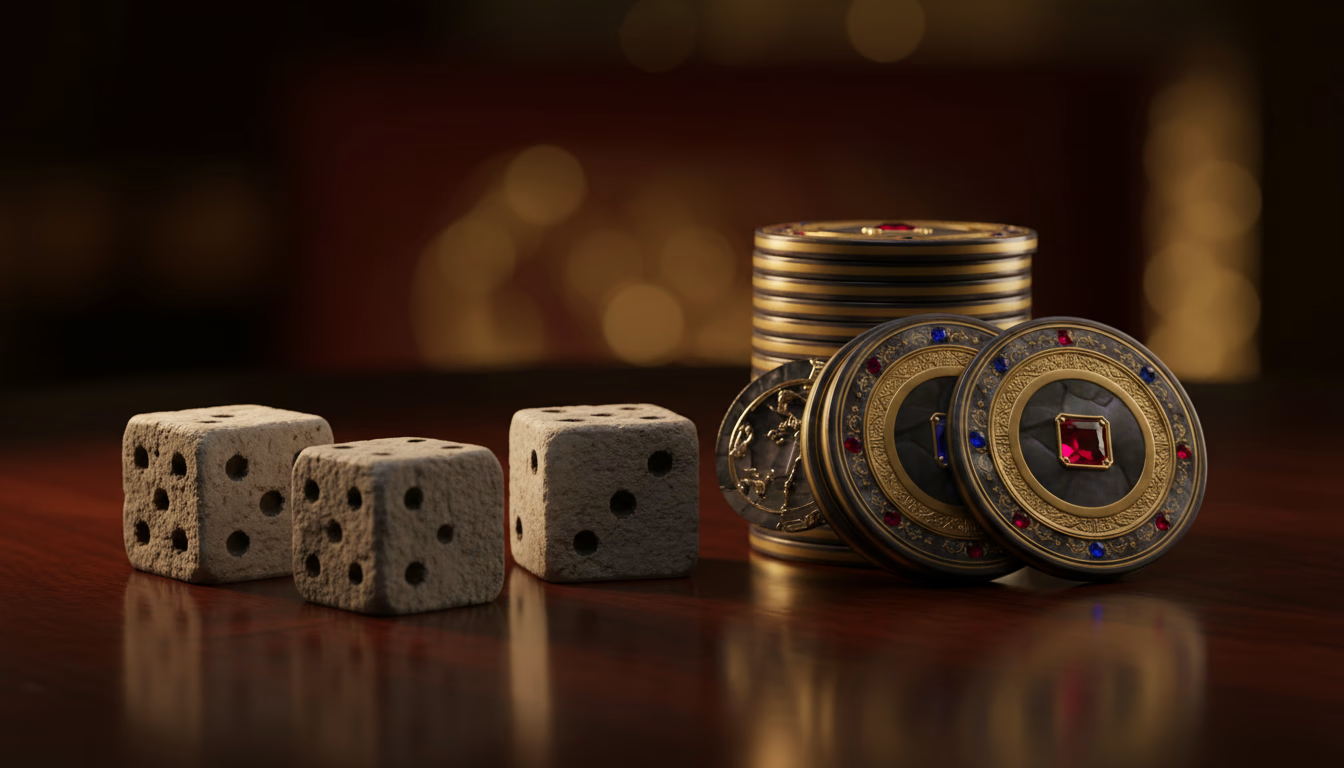
Dice: one of the oldest gaming objects
Long before cubic dice, people played and cast lots with knucklebones, the small ankle bones of sheep and goats, which come to rest on one of four sides. Cubic dice have been found at Bronze Age sites in the Middle East and the Indus Valley, and museum collections hold Roman dice of bone, ivory and metal. Some ancient dice are irregular or weighted, a reminder that cheating is as old as the game.
What these finds tell us is modest: people have gambled for thousands of years. They do not tell us who played, for what stakes or with what result, so any story that ties a particular die to a king or a battle is decoration, not history.
Cards, chips and plaques
Playing cards are documented in Europe from the late 14th century. Early gaming counters were made of bone, ivory, wood or metal; standard casino chips spread with commercial casinos in the 19th and 20th centuries. Many European casinos also use plaques, large rectangular pieces for high values, while American casinos have mostly used round chips.
A chip is a token of value only in the casino that issued it. When a casino closes, its chips can usually no longer be redeemed, which is why chips from closed casinos are what most collectors look for.
| Object | What it is | What a collector checks |
|---|---|---|
| Knucklebones | Animal ankle bones used for games and divination | Provenance: an excavation or museum record, not a dealer’s story |
| Ancient dice | Cubes of bone, ivory, stone or metal | Where and when found, a published description; modern replicas are common |
| Casino chip | Round token issued by one casino | Mould pattern, inlay with casino name and city, denomination, edge marks |
| Plaque | Rectangular high-value token, common in Europe | Serial number, issuing casino, denomination, condition |
How collectors check a chip
- The issuing casino: the name and city on the inlay, and whether that casino really existed and when it closed.
- The mould and edge marks: manufacturers used distinctive mould patterns and edge spots, and collectors’ reference catalogues record which ones each casino ordered.
- The denomination and colour: they should match what the casino is known to have used.
- Wear: a chip that saw play has even wear; a chip that looks brand new may be unused stock or a reproduction.
- Provenance: where the piece came from and who owned it. Souvenir and reproduction chips are sold openly; they are not fakes, but they are not casino issues either.
We do not publish prices. Values depend on rarity and condition and change with the market; check recent sold listings or ask a collectors’ club rather than trusting a figure in an article.
A practical takeaway. A chip on a shelf is a piece of history; a chip on a table is money. If you play, set deposit and loss limits in your account first and never gamble on credit. If playing stops being fun, contact your national gambling support service (in Finland, Peluuri); it is free and confidential.
The habit of asking for a source works elsewhere too: how to check a casino’s green claims applies it to sustainability promises, and how to check a celebrity gambling story applies it to big-win and big-loss legends.
Frequently Asked Questions
Where can I see ancient dice?
In museums with archaeology collections. Many museums publish their collections online with the find site and date, which is the kind of record a genuine ancient piece should have.
Are old casino chips valuable?
Some are, most are not. Value depends on the casino, rarity, denomination and condition. Chips from long-closed casinos and rare denominations are what collectors look for; common chips from casinos that are still open are rarely worth more than their face value there.
Can I still cash in a chip from a closed casino?
Usually not. A chip is a promise by the casino that issued it, and when that casino closes the promise normally ends. If you are unsure, ask the gambling regulator where the casino operated.
Old gaming objects show how long people have gambled; they say nothing about how the odds work today. Enjoy the history and keep your limits for the table.